

About two years after the conversation with the half-Canadian, half-Lebanese girl in Paris, I was entering a local train in northern Romania. Once more I was traveling by myself, now two years into my philosophy studies and naturally significantly wiser. And once more, life was teaching me lessons in real-time, bluntly ignoring my freshly earned philosophical wisdom.
Walking through the crowded wagon, I spotted a free, single window seat. Just in the moment I sat down, I saw a man who had aimed for the same seat, but was still about five meters away down the corridor. He gave me a hostile glance, turned around and sat down on the floor, leaning against the back wall of the wagon, facing me.
Again and again in the next hour of the journey, I felt his angry glance on me. He still despises me for taking his potential seat, I thought. I felt anger growing in myself. Yes, I was a young German traveler in Romania. But he wasn’t that old either and certainly not in an age or physical condition that would have required me to offer him my seat. Yes, I was visibly a foreigner and he was probably local. But I absolutely didn’t approve of any form of xenophobia.
He has no right to be hostile towards me, I thought. I paid for my ticket, I hadn’t even rushed to get the seat. Actually, I had walked pretty calmly and yet, the seat had been empty when I arrived. It would have been stupid not to sit down. I have every right to enjoy the comfort of the seat and the beautiful view of the landscape. In fact, the man should be happy for me, the foreign traveler, to get the chance to appreciate the landscape of his homeland. After all, it wasn’t likely that I would ever take this train again and this was my only chance to enjoy this view, while he probably had this view multiple times per week. But instead, he was spoiling my one chance to peacefully enjoy this journey. He was even spoiling the deep reflections and insights that I could have watching the landscape passing by, if only I had had the chance to sit on my seat in peace.
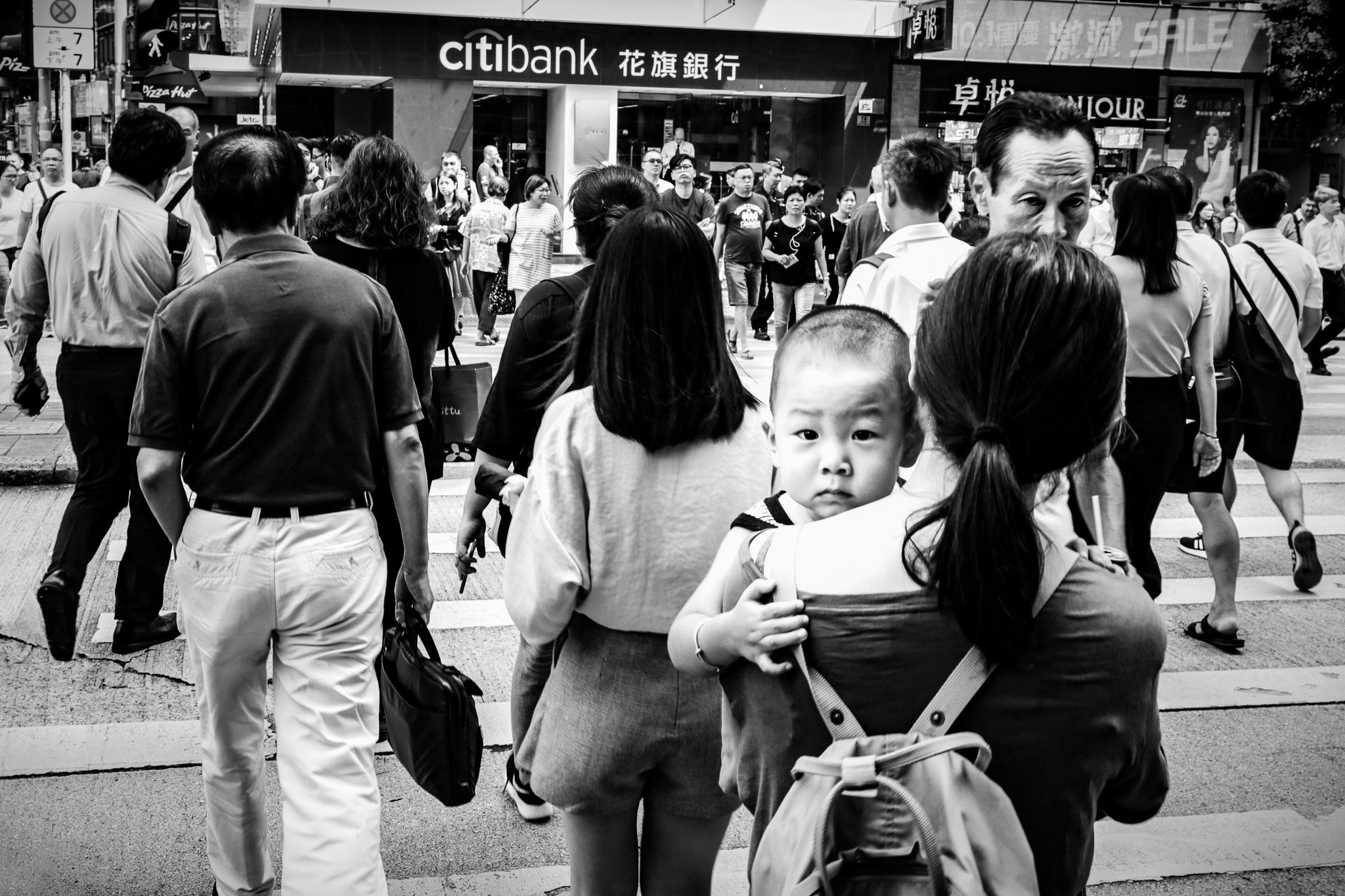
In this moment, I noticed a little boy sitting on the floor a few passengers away from the man. The boy was looking up through the window, probably seeing the sky and the tops of the passing trees. His face had a dreamy expression, deeply sunk in some thoughts or stories. Of course, I couldn’t read the mind of the boy, but from all I could tell it wasn’t occupied with his seat situation.
I felt a warm sympathy for this boy rising in me. How beautiful he was, just sitting there, just humbly enjoying the limited view he had, just immersed in existence, as children often are, as we all should be. My sympathy was joined by gratefulness towards the boy, who had brought me back to the moment, who had just by his calm, subtle presence, calmed my anger and reminded me of what is actually real and important.
My glance went back to the man. When our eyes met, he looked away, his face still looking irritated, still full of anger and hostility. In this moment, I saw the beauty of this man. I saw the child in this man, sad, lonely, full of fear. Who was I to him? Just another person he didn’t know, certainly not someone who could really hurt him just by taking a seat he would have liked to sit on. His anger was just a reflection of something much deeper, something I couldn’t know anything about and that had nothing to do with me. What did I know about the pain he had been going through in his life?
I felt tears in my eyes. Tears for this man, tears for the child in this man, tears for the children who were thrown into this world in which there wasn’t any real certainty, in which so many painful, horrible things were happening every day.
This was the moment when I really understood what the half-Lebanese, half-Canadian girl had meant when she had asked me to look at these beautiful people. This was the secret core.
I felt the same warmth, the same gratefulness towards the man that I had felt towards the boy. When he looked at me again, his face changed, before he looked away again. I moved my eyes to the landscape passing by and got lost in dreams and reflections.
An old question refined
In this little story, nothing noteworthy really happened. The man didn’t wait for me when I got off to punch me in the face. I didn’t meet a stranger whose words stuck in my mind. I didn’t talk to anyone, or do something, besides sitting on a seat in a train and looking around.
But it was once more one of the most important moments I remember living through. It was when the Philosophy of Sincerity really took shape in me. And when I realized how easy it was for my view to be numbed and distorted by my own insincerity.
From here, the old question poses itself in a deeper iteration: Why are we insincere? What happened to us as a species that makes it so difficult for us to “really be ourselves”? What’s wrong with our societies, our cultures, our civilizations, that distracts us from the simple, clear, fundamentally deeper view of which I had had a glimpse in that moment?
This is the guiding question of this second part of the Philosophy of Sincerity. And the answer, I believe, has implications far beyond individual self-improvement. It touches the foundations of how we understand ourselves as a species, where our search for meaning comes from, and what it will take to build societies that are more in balance than they currently are.
Continuing towards a philosophy
If you look at a bird flying in the sky, a dog running after a ball, a rabbit jumping over the grass, they all seem pretty much in touch with themselves. So again, what’s wrong with our species that we have such a hard time being sincerely ourselves?
In Part 1, I defined sincerity as:
A commitment to face reality without deceiving ourselves, combined with a commitment to stay in touch with ourselves without being distracted or manipulated by external influences or internalized reaction patterns.
The easiest place to observe human sincerity is in young children. A little child exploring the world doesn’t engage in systematic self-deception, doesn’t build elaborate stories to justify its actions. A child is simply present, openly navigating reality with curiosity and vulnerability.
Yet somehow the older we get, the harder it gets to be this sincere. In Part 1, I also argued that sincerity is a path, rather than a state we have achieved or not. We can be at different levels of sincerity in different moments in a single day. For example, compare how you feel after an hour of scrolling through social media versus an hour spent walking in the woods, or having a deep conversation with a close friend.
If we want to explore why it seems so difficult to be sincere most of the time, we need to start from some basic questions about what we are.
Starting from our fundamental attributes as human beings
The Philosophy of Sincerity is based on five fundamental observations about the human species. Each is straightforward and well established in evidence-based science. They describe basic attributes that we all share, and we share them at least to some extent with other species:
1. We are adaptive beings.
2. We are conscious beings.
3. We are sentient beings.
4. We are cooperative beings.
5. We are intelligent beings.
What distinguishes humans from other species is that we show high levels in all five of these attributes, and it’s this specific combination that creates both our extraordinary potential and our specific existential challenges:
1. We are adaptive beings.
Humans are extremely adaptive. We can survive and function in deserts, arctic regions, dense cities, and isolated islands. Our babies are born in an extremely undeveloped state compared to other mammals, which is not a flaw, but a crucial mechanism of our adaptivity. It allows for massive neural and behavioral adaptation in the first months and years of life. And this adaptation continues throughout our existence, through learning, through shifts in values and worldviews, through epigenetic changes in response to our environment.
2. We are conscious beings.
Consciousness is the fundamental property that allows us to perceive, experience, and reflect. It can only be understood through the direct, primary experience of being conscious. If you weren’t conscious, you would have no way to understand the word consciousness.
This is a phenomenological definition: consciousness is the basic condition that we all share by the very fact that we are experiencing reality. We can achieve different levels of consciousness, allowing us to be more or less present in a given moment. But only if we are conscious to some extent can we actually have experiences.
3. We are sentient beings.
Sentience is our capacity to feel. Only conscious beings can experience feelings; otherwise, there would be just behavioral reactions, not experiences. And sentience is not binary. The more sentient we are, the deeper our experiences can be. Without it, we wouldn’t be the beings we are. We’d just process inputs and produce outputs. We could still be conscious, but we would just observe the content we process with complete indifference.
4. We are cooperative beings.
Cooperation is what made humans the most impactful species on this planet. But our cooperation isn’t like that of ants, whose collective behavior is genetically hardwired within colonies. Human cooperation is flexible, spontaneous, and can extend to strangers, even to members of other species.
This requires an emotional structure that facilitates and primes us for trust-based relationships. Our cooperative capacity wires us to feel compassion, not just with close family, but with people we’ve never met, with pets, even with wild animals that we just see from afar. This capacity is fundamentally wired into our emotional architecture and defines how we experience the world.
5. We are intelligent beings.
Intelligence allows for complex problem-solving, abstract concepts, consistent language, and the navigation of complex environments with incomplete information. It enables mathematics, engineering, science, philosophy, and the kind of complex communication that makes texts like this one possible. Without a high level of intelligence, we wouldn’t be able to reflect on our own condition, let alone try to change it.
The immense power of combining these attributes
The order of these attributes matters: 2. through 5. are tools for our capacity for complex adaptation. Consciousness enables sentience. And conscious sentience enables the complex processing of our emotional architecture that drives flexible cooperation at scale. Finally, our cooperative nature shapes the specific way our intelligence operates.
These five attributes together explain something crucial: Because we can intentionally influence the very environment we adapt to, we have the power to influence our own adaptation. This can lead to enormous cultural achievements, technological breakthroughs, and opens the space for basically endless creativity.
But it also comes with an enormous risk: our extreme adaptivity lets us adapt to self-created conditions, even if they are deeply pathological for us. Once we’re off track, we can create negative adaptation loops that result in a severe misalignment between our self-created environments and our original fundamental attributes that are hard-wired into the deepest levels of our being.
This is what happened when our species started becoming insincere.
The source of meaning
The five fundamental attributes lead to another fundamental implication. They constitute the basis for the source of meaning itself.
Through these five attributes, we have the capacity to care about things. And things get meaning because we care about them. There is no independent, abstract idea of objective importance written into the fabric of the universe. Giving meaning and value to things is part of our complex adaptation processes. Our brains tend to “outsource” value into things and actions. It’s much easier to navigate the world, if we think “it’s important to do this” and so we do it, or “this is a very valuable thing” and so we try to get it.
A sunset has no meaning without someone who is moved by it. A smile has no meaning without someone who feels it. Even the concept of existence itself requires someone who experiences existing. Without sentience, the universe is just a vast interplay of particles and energy states. Value is the degree to which sentient beings care about something. If nobody cares, nothing has value.
The other fundamental attributes are the reason why this creation of meaning and value is not random.
This is a core claim of the Philosophy of Sincerity:
our capacity to care, rooted in the combination of our advanced, conscious sentience and our cooperative emotional structure, is the only source of meaning in the universe.
And because we are intelligent beings, we can extend this meaning to all kinds of objects, processes, and relationships. There might be other sentient beings out there who care. If so, they too create meaning. But without beings who care, meaning, importance, and value simply don’t exist.
And our caring is not arbitrary. Our emotions, feelings, and reasoning capacities evolved to enable our fundamental nature as a cooperative species. If we manage to access our deepest drivers, what we find is an emotional structure that is oriented toward trust-based, caring cooperation. We evolved as a species where individuals care about each other, not just about themselves. This characteristic primes all of our perception and understanding of reality.
This brings us to the most powerful implication of the philosophy of Sincerity: Our existence is shaped by our capacity to love.
Our capacity to love is at the very core of what makes us human. All other strong emotional states can be traced back to it. If we feel fear, we fear for something we love. If we are angry or sad, we are angry or sad about something that happened to what we love.
The word “love” might seem too blurry for a philosophical system. But our distorted relationship with this word is itself a symptom of our current insincerity. In the philosophy of sincerity, love is not romantic love or compassion or affection for things, though it manifests in all of these.
At its essence, love is a simple, fundamental capacity that we can observe within ourselves in moments of deep meditation. We can also grasp the idea of it in any moment when our defenses drop, for example when we’re holding a newborn baby, or when we feel the inclination to help someone in danger, or in the grief over the death of someone close to us.
From a systematic perspective, this capacity to love is a necessary condition for our existence as a cooperative species. Humanity wouldn’t be possible without it and the human experience can’t be conceived without it. Any attempt to do that results in fiction grounded on distorted views of reality.
Our capacity to love is at the base of our “power” to give meaning to things. Things get meaning, because we care about them. And we care about something, because it touched our capacity to love in one way or another. Sincerity, in its essence, is the degree to which we’re able to access this capacity in us.
We’re insincere, because we lost touch with this capacity to some extent and adopted views of reality that aren’t grounded in it.
But why did we lose touch?
The Change that changed everything
The human species evolved from our ancestor species about 280,000 - 300,000 years ago. For most of the time since then, humans lived in small groups where everyone knew everyone. This was also the condition of the species we evolved from, stretching back millions of years. Our nervous systems, our emotional patterns, our capacity for trust, all of it evolved for this setting. This evolution shaped the five fundamental attributes outlined above.
Within the group, everyone could be relatively relaxed, unless there was an acute external threat. Cooperation was deeply built into all perception, thinking, and action of humans. Trust was the fundamental norm that guided all human interaction in everyday life.
If a group of humans met another group, the general emotionally primed inclination was to trust them as well. This enabled humans to cooperate with strangers and exchange goods across large distances. The emotional architecture that allowed humans to cooperate at larger scale is what distinguished humans from similar species like the Neanderthals. The Neanderthals were actually of a stronger physical build and had larger brains. But it was the species Homo sapiens that survived and spread over continents at least in part thanks to our ability to build inter-group cooperative networks.
In everyday life, humans stayed in small groups, leaving the numbers of other humans that any member would regularly deal with well within their cognitive capacities. Research in evolutionary psychology estimates the number of other humans we can “know” at about 150 people. Within this number, humans can build stable social relationships with one another, thus enabling an environment of trust.
For more than 250,000 years of our existence, humans existed in social conditions where this number was never exceeded for longer stretches of time. Importantly, this number wasn’t exceeded for an individual and also not for any of the other individuals they would meet. Humans didn’t need to learn trust, since it was the fundamental default mode of our species.
The Neolithic Revolution
About 12,000 years ago, everything changed with the invention of agriculture and permanent settlements. For the first time, humans were regularly exposed to social groups that exceeded what our social cognition could handle. From this point on, humans had to live with the regular presence of strangers, of people whose intentions they couldn’t read and whose trustworthiness wasn’t guaranteed by their social intuitions.
This is not about romanticizing pre-civilizational life. Of course, many of the inventions and changed conditions that followed have improved health and quality of life at least for some part of humanity. But the point here is a structural observation about our nervous systems that evolved for a social world that began disappearing 12,000 years ago.
The consequences were enormous. Living among strangers created a permanent state of social uncertainty, which in turn led to a state of latent, chronic fear. It’s this chronic fear state that then led to the social ills we’re observing today, like greed, violence, crime, oppression, slavery, wealth inequality. Rather than being inevitable features of human nature, they are consequences of a species built for intimate cooperation being thrown into conditions of chronic social uncertainty.
It’s hard to overstate the impact of these changed conditions. All social, cultural, and political institutions and systems, all philosophies, all organizational models that were invented since then, have been attempts to understand, reinvent, and organize ourselves in these changed conditions.
And because these conditions weren’t what we evolved for, the identities and stories we picked up to cope with them tended to be increasingly unaligned with our deepest emotional structures.
This, in essence, is the origin of our insincerity.
Chronic defense-mode: the mechanism
Our nervous systems have a well-documented emergency mode. When we perceive a threat, we shift into fight-freeze-or-flight: our perspective narrows to immediate survival, our emotions reconfigure for rapid self-protective action, our capacity for empathy and nuanced thinking decreases. This is an adaptive response that can be incredibly useful for short-term threats and can be found in different forms in all species with complex nervous systems, including us Homo sapiens.
The problem starts when this mode becomes chronic
In modern societies, we exist in a state of permanent latent alertness. Of course, we aren’t constantly chased by predators. But existing in group sizes that outsize our cognitive capacities creates a low-grade, ambient fear that we normally don’t notice because our adaptation systems normalize it. We also cannot observe it in others since everyone around us is in this chronic latent fear state too, making it the normal reference point.
If this chronic, latent fear state reaches levels that we can actually perceive, we call it “stress” or “life is tough”. An easy way to observe it is when we travel to cultural environments that differ from what we’re used to. In these cases, we’re often surprised how “relaxed” or how “stressed” everyone seems, depending on the comparative level of distortion we’re coming from.
Simple neuro-biological mechanisms
The internal mechanisms behind this can be described in relatively simple terms. In chronic fear state, we adopt a chronic defense-mode and our feelings and emotions shift accordingly. In our adaptation process, feelings and emotions function as incorporated, stored reaction patterns. They are embodied shortcuts that allow us to act faster than if we had to process everything through our deeper values and rational deliberation. These stored reaction patterns are useful in genuine emergencies. But when the sense of “emergency” never ends, they override our original, deeper emotional structures that have evolved for trust and cooperation.
This is the essential mechanism of insincerity: our conditions push us into chronic fear-state, and the resulting defensive patterns override access to our sincere core.
Most modern humans haven’t been in a sincere state for a single second of their life. Already in our mother’s womb, we are exposed to the hormones produced by her chronic fear state. And this pre-conditioning is reinforced by our experience of a social environment marked by chronic defense-mode from the moment we are born.
The role of psychopathy
Another mechanism reinforced this situation starting with the Neolithic revolution. Before, humans lived in groups where they knew each other well enough to identify the extremely rare cases where an individual’s capacity for empathy was neurologically impaired in ways that today we would describe as psychopathy.
But once human societies grew beyond the scale of intimate groups, this changed. The distorted conditions of larger settlements opened windows for individuals without empathy to manipulate and threaten others and reach positions of power. Wherever this happened, it amplified the creation of competitive power structures.
Part of what makes this so consequential is that so called “successful” psychopaths are capable of cognitive empathy, meaning they can predict how another person feels without actually sharing those feelings (which would be affective empathy). They can use emotional connections as instrumental tools to manipulate people. In small, close groups, this would be recognized. In complex societies with competitive structures, this can be hidden and become an advantage.
The rising role of psychopaths in the development of our civilizations has contributed significantly to social structures that spread and sustain insincerity.
Multiplied psychopathy
At first, psychopathy was extremely rare, as it was a symptom of neurological impairment caused by random genetic mutation or pre-birth accidents. But when the conditions of society became traumatizing to humans from early age on, a new type of psychopathy appeared.
Increasingly, the distorted social conditions created so called secondary psychopaths, human beings whose neural structures were impaired in response to strong and repeated traumatic experiences, who had lost their capacity for affective empathy.
This new type of psychopaths spread much faster in growing societies and in return created a vicious cycle of institutional and social adaption, resulting in even more traumatizing conditions for newly born children.
This is an important part of the mechanism by which the insincere societies that we can observe today came into existence.
Reshaping the “normal”
In a sense, much of what we experience as “normal” culture, institutions, and legal systems today has been designed in response to the behavior of neurally impaired humans who don’t share the emotional and empathetic foundation the rest of us share.
Basically all of our philosophical, religious, and cultural worldviews, as well as the corresponding social norms, have developed in this context. Any “truth” about humans and society today is only true in relation to these distorted conditions.
Modern humans are zoo animals
If you take animals out of their natural habitats, they adapt and develop behaviors they wouldn’t have in the wild. If an animal was born and raised in the zoo, it is likely to die when it is set free.
Modern societies have created artificial conditions for us humans that have turned us into the equivalent of zoo animals. We have adapted to conditions that put us out of touch with our deeply inbuilt inclinations. This leads to constant inner contradictions, which we then tend to project into external “needs”. We develop needs for more security, for more comfort, for more entertainment, for more consumption. But none of this can fill the void that is created by the fact that we’re out of touch with our deeper drivers.
We can study human behavior, develop sophisticated theories and models about human psychology, sociology, and economics, and build entire civilizations on our assumptions about “what it means to be human” or “what humans need”. All of it is based on data from zoo conditions. We observe ourselves in environments we didn’t evolve for and then draw conclusions about how we function.
This doesn’t mean we should try to go back to pre-civilization conditions. Even if we wanted to, we can’t reverse millennia of complex adaptation processes and nervous system restructuring.
But we are the only species that can observe its own cage. We can start understanding our own zoo conditions and recognize the patterns they create in us. And we can explore which conditions are more healthy for us and lead us to forms of existence that are more in line with our deeper drivers.
The vicious cycle
Chronic defense-mode makes us view others as potential opponents or competitors. Once we see others this way, we stop communicating openly with them. Without open communication, we start developing false assumptions about their intentions and actions. We then act on these false assumptions. And once we’ve acted on false beliefs, our identity becomes invested in those beliefs to justify our behavior. Admitting that we were wrong means threatening the story we tell ourselves about who we are.
The perceived competitive and “hard” ‘ environment lets most of us try to adapt to it, rather than trying to face and accommodate our traumas. It takes much more courage, energy, and strength to do that than to project our needs on the external world. Most of us don’t have the luxury to invest the required energy and time, let alone getting the support they would need for that.
The origins of greed and power
Fear leads to a need to control. If our brain registers a state of uncertainty, it seeks to find a way to control the situation. For example, when you’re walking on unstable ground, your brain immediately focuses on controlling your balance.
If we succeed in reaching a perceived level of control that our brain considers sufficient, it reacts with activating our neural reward systems. As with all of our neural reward mechanisms, this process can turn into an addiction.
Humans who are exposed to a constant state of fear, feel a constant need to control. One avenue that gives an illusion of control can be accumulating material stuff. By seeking for income and wealth, we try to control our environment. Since our fear state is chronic, we internalize this striving for material resources and adopt the emotional structure that we call “greed”.
We can also seek to accommodate our social fears by trying to achieve control over others. This gives rise to the emotional structure that we call a drive for “power”. In a state of chronic fears, these emotional patterns get internalized into our “personality” and define our “normal” preferences.
In its most extreme pathological form, this can turn into power addiction. And since our social and political institutions have evolved in response to our collective pathologies, they have integrated paths for the exercise of severe power addiction.
The results are highly distorted social structures like autocratic regimes, corporate hierarchies, mafia organizations, political corruption, and pathological institutional meta-systems that we call, for example, “capitalism” or “the patriarchy”.
All of this is deeply insincere, and it systematically promotes insincerity in all humans affected by these institutional systems.
Transmitting distorted perspectives across generations
Each layer of defense adds another wall between us and our sincere core. These walls also accumulate across generations.
Our parents’ and caretakers’ fears and defensive patterns shaped the emotional environment we grew up in. Their reactions, their anxieties, their blind spots left deep imprints in our neural structures during the years when our brains were most plastic. And their parents and caretakers shaped the world for them.
New deep emotional imprints emerge within most of us over the course of our lives. They arise through our experiences and our reactions, and they grow through repeated experiences and habitual behavior patterns. But even as they grow bigger and stronger, they are very hard for ourselves to see. And those we don’t see, we are highly likely to pass on, making them part of humanity’s accumulated emotional heritage.
This chain of intergenerational emotional inheritance stretches back thousands of years, all the way to the first communities where chronic social uncertainty began.
Insincerity is contagious
There is another aspect that makes this vicious cycle particularly hard to break. Insincerity is easily “transmitted” between humans.
Just a few deeply insincere individuals in a group can create an atmosphere of mistrust that pushes everyone else further away from their sincere core. We are adaptive, social beings. We read patterns and perceive “energies” in the people around us. When we encounter someone stuck in defense-mode, our own nervous system responds in kind. This happens subconsciously, because our social neurobiology has evolved to quickly spread information about dangerous situations.
Anyone who has found some inner peace and then comes into a social setting where most people are deeply stuck in defensive patterns knows this experience. The presence of fear-activated people pulls your nervous system back into fear-mode.
In fact, the further we get in our capacity for awareness and emotional sensitivity, the more sensitive we get to the fear-state of others. If we don’t have the specific knowledge to recognize these situations and enough training in rebalancing practices to deal with them, we can easily feel thrown off balance.
The vicious circle effect at society level
This contagion effect means that insincerity is self-reinforcing at the social level. The conditions of modern societies have developed to manage increasingly high levels of insincerity, often in ways that actively amplify it. An obvious example is the widespread individualism and competition culture, which selects for restless, aggressive, driven individuals and puts them in positions of influence. Consumption cultures engineer our attention toward external validation, emotional avoidance, and the projection of real needs on artificial wants for material accumulation.
One of the most fundamental dilemmas of “civilized” humanity is the fact that restless, frustrated, greedy people tend to be more industrious and productive than relaxed, fulfilled, and happy people.
The most balanced, grounded individuals tend to be less interested in accumulating power. In an environment that is shaped by competition and individualistic norms, this results in a vicious circle effect where the conditions we all live in keep being disproportionately shaped by the most insincere people.
This dynamic is at the root of much of the injustice, environmental destruction, and mental illness we see in the world.
Not a one-way road
Fortunately, this is not the only dynamic at work. Throughout all of human history, there have also been movements, traditions, and institutions that pushed in the opposite direction. The ancient Greeks preached “know thyself.” Buddhism is fundamentally a practice of reconnecting with what’s real beneath our patterns. Judaism promotes the uncompromising search for truth, Jesus Christ preached (re-)connecting with our core of love, Islam teaches purity of intentions free from hypocrisy or desire for worldly praise. Spiritual and shamanic traditions offer rituals and practices to heal and reconnect with nature. Modern psychology prescribes self-connection as a pillar of mental health. Modern science upholds an ideal of honest inquiry and rigorous testing of assumptions and paradigms.
We humans have always searched for ways of healing and free self-expression, and our deep-wired capacities for cooperation have always been a source for a search for ways of living and organizing ourselves that feel more healthy and free.
Our cooperative core has been buried, not destroyed. It keeps surfacing again and again, in every generation, in every culture, because it’s still the strongest thing that exists in us.
Implications of the Philosophy of Sincerity
In summary there are three main implications that I believe are strongly relevant for our lives, no matter where we are at.
First: Our societies are deeply ill.
The structural conditions of our current societies are the collective creation of humans who have gone through all types of mental distress and trauma. Throughout modern history, individuals with psychopathic brain disorders have had significant impact on the political institutions and social norms that developed.
Because we are adaptive beings, we have accepted these distorted social conditions as normal. The chronic stress, depression, anxiety, autoimmune diseases, and addictions of our times are symptoms of a species living in conditions that systematically push it away from its own nature.
We normally see phenomena like polarization, racism, sexism, or xenophobia as somehow emerging social conditions. From the perspective of the Philosophy of Sincerity, they are symptoms of a collective mental health crisis.
Second: We are all carrying our specific version of this illness.
We were all born as children who had no choice but to adapt to the social conditions in which we and our families found ourselves. And our own family members and caretakers have grown up in distorted conditions themselves, resulting in them transmitting at least some of their own traumas and pathological adaptations to us. We’re all ill, whether we like to admit it to ourselves or not.
This is absolutely not about blame. Instead of being a negative label, our insincerity is something that reflects our depth and value as humans. Because the very reason why the distorted social conditions we grew up in made us ill and insincere is the cooperative, caring core that led us to build defense mechanisms to protect ourselves. And this core is at the same time the source of all real meaning and value in the world.
Third: We can heal.
The first thing this requires is for us to accept our situation. The process of becoming more sincere is not easy. It’s incredibly hard for us humans to admit that most of our beliefs are symptoms of our traumas and social distortions. Even softly touching the topic can trigger aggressive defense responses, from shutting down reason to verbal attacks and even acts of physical violence.
There are many methods for increasing our level of sincerity, and which ones work for us depends on our specific conditions and the particular shape of our walls. Meditation, therapy, community practices, honest relationships, creative work can all be powerful pathways towards a more healthy and sincere existence. What matters is the commitment to keep going deeper and to return to the path whenever we find ourselves off track.
If we have the courage to go down that path, we can reach to the core of the philosophy of sincerity. This core is very simple, any human, anywhere, and from any cultural background can see it if they dare to look:
Sincerity is our capacity to access our love.
Overcoming our defenses
When reading these words, our usual defense mechanisms might activate. This sounds cheesy, this sounds blurry, this sounds unrealistic. But if we reach this insight after walking the exhausting, scary, fascinating path of sincerity, we can see it as a fundamental description of reality that is as sober, clear, precise, and realistic as it gets.
Beneath our defensive patterns, beneath our inherited fears and reactions, beneath the stories we tell ourselves about who we are and what the world is, our capacity to love is always there.
The real challenge of our time
The transition from ego-driven, individualistic competition mode to sincere cooperation is the fundamental challenge of our time. Everything else, the political crises, the wars, the ecological destruction, the extreme inequality, the technological disruptions, the mental health pandemic, is a consequence, rather than a root cause.
This might sound like an overwhelming claim. But it actually simplifies things enormously, because it gives us a clear path forward that contributes to anything we might work on.
Cooperation is a basic attribute of our human species. We don’t need to invent it or learn it from scratch, but rather need to free it. It has been there for 250,000 years and we all carry the emotional patterns it requires.
We differ in how much we’ve numbed it, how many layers of defense we’ve built on top of it, what forms these layers take, and how strongly we’ve trained ourselves to look away.
The good thing is that becoming more sincere is the most freeing, purpose-giving process that we can embark on. Sincere happiness is the most beautiful thing we can achieve in life. And it begins with a single, uncomfortable, beautiful step: admitting that we are insincere.